How RFID Is Saving Hospitals Thousands of Hours — And Why Healthcare Asset Tracking Is Taking Off in 2026
Discover how passive RFID saved one healthcare company 950 working days per year. Learn why hospital equipment tracking with RFID is surging in 2026.
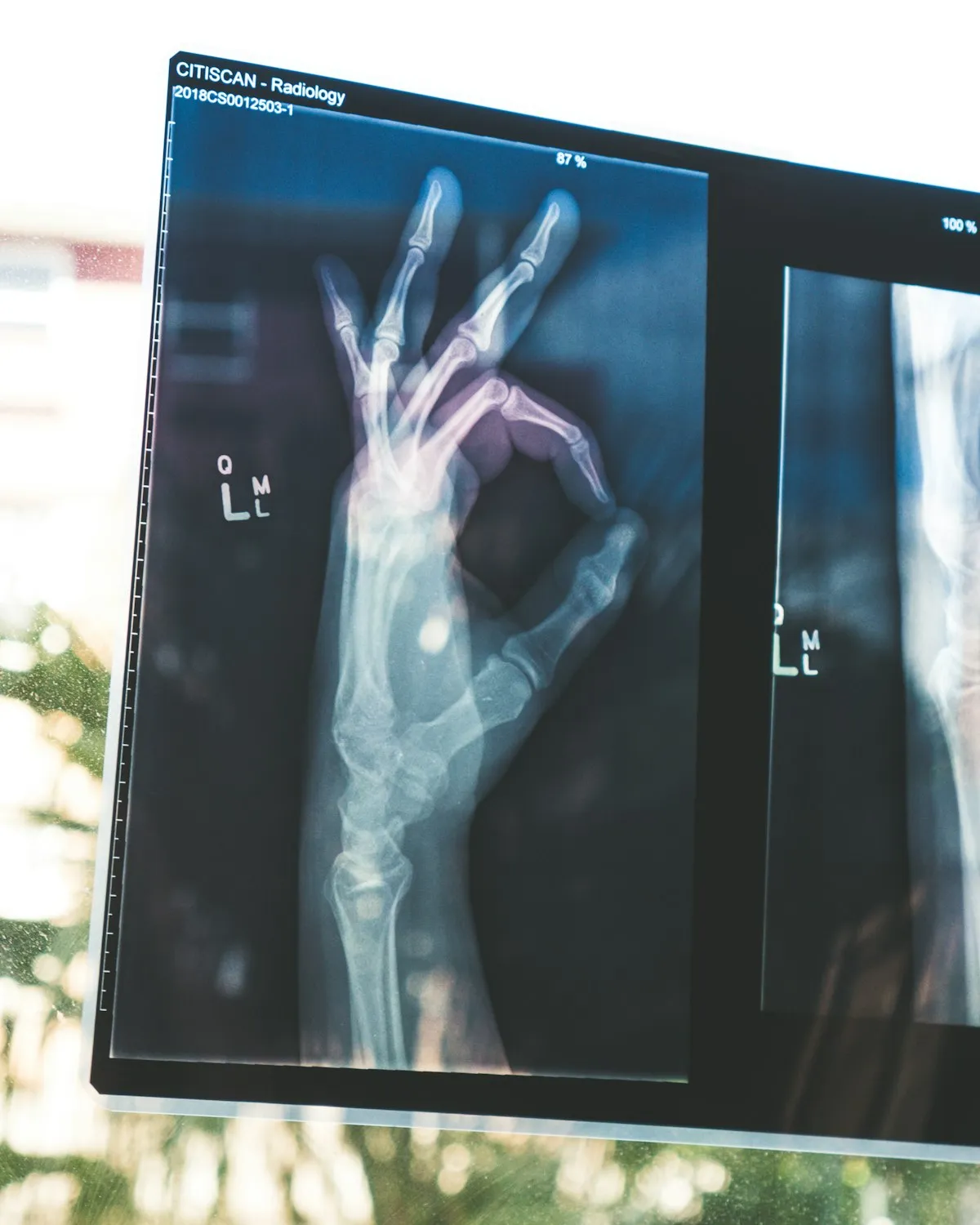
A UK medical equipment company recently deployed passive RFID tags across its decontamination workflow — and saved 950 working days in a single year. That is not a projection or a pilot estimate. It is a real-world result from a system processing over 12,000 rental medical devices annually, and it illustrates why healthcare asset tracking has become one of the fastest-growing segments in RFID adoption.
For years, hospitals and healthcare providers have struggled with a deceptively simple problem: knowing exactly where their equipment is, what condition it is in, and whether it has been properly maintained. The consequences of getting this wrong range from wasted staff hours to regulatory non-compliance and, in extreme cases, patient safety risks. Now, as RFID technology matures and costs decline, healthcare organisations across the globe are discovering that automated asset tracking delivers returns that dwarf the investment.
The 950-Day Case Study: Essential Healthcare and CoreRFID
Essential Healthcare, a UK-based specialist in medical equipment hire and decontamination, provides mattress systems, pumps, and bariatric equipment to the National Health Service and private providers. Their operation processes over 12,000 rental systems each year through a rigorous decontamination workflow: washing, cleaning, servicing, bagging, and reassembly.
Before RFID, every stage of this process relied on manual paper records. Staff wrote down asset details by hand at each checkpoint — a time-consuming process that slowed throughput and made compliance verification difficult.
“That piece of paper was a trust exercise more than something that could be evidenced,” said Lucy Mathie, IT & Business Systems Support at Essential Healthcare.
CoreRFID specified and supplied passive UHF RFID tags in two formats tailored to the harsh healthcare environment:
- Laundry-compatible tags rated for industrial washing cycles up to 85°C, applied to mattress covers
- Durable label tags featuring NXP UCODE 7XM chips with up to 2,048-bit user memory, used on pumps and bariatric equipment
Both tag types operate at 860–960 MHz and comply with ISO 18000-6C. Staff scan them using TSL handheld readers at key workflow checkpoints, with each scan automatically updating the company’s software system.
The Results
The impact was immediate and dramatic:
- Asset tagging time dropped 50% — from 3 minutes per asset to 90 seconds
- 16 minutes saved per system across the full workflow
- 3,418 hours saved annually — equivalent to 950 working days
- Automated quality gating — incomplete decontamination blocks dispatch entirely
That last point deserves emphasis. The RFID system does not merely track assets faster; it enforces compliance. Before a mattress system can be dispatched, staff must scan three tags — base cover, top cover, and inner mattress — and the software verifies that every decontamination stage has been completed. Equipment that has not been fully processed simply cannot leave the facility.
Why Healthcare RFID Is Accelerating in 2026
Essential Healthcare’s story is not an isolated case. Several converging trends are driving rapid RFID adoption across the healthcare sector.
The Scale of the Problem
Hospitals are asset-intensive environments. A typical 500-bed hospital manages between 35,000 and 50,000 mobile assets — from infusion pumps and wheelchairs to surgical instruments and patient monitors. Studies consistently show that nursing staff spend 20–30 minutes per shift searching for equipment, and that 10–20% of mobile assets are “lost” at any given time (not actually missing, but impossible to locate quickly).
This is not merely an inconvenience. When a clinician cannot find a specific pump or monitor, the fallback is often to rent or purchase a replacement — contributing to equipment hoarding, redundant purchases, and inflated operating costs. GE Healthcare has estimated that poor asset utilisation costs the average hospital $4,000 per bed per year.
Regulatory Pressure
Healthcare regulators worldwide are tightening requirements around equipment traceability, maintenance documentation, and infection control verification. The EU’s Medical Device Regulation (MDR), fully enforced since 2024, mandates unique device identification (UDI) and comprehensive lifecycle tracking for medical devices. In the United States, the FDA’s UDI system requires similar traceability.
RFID provides the automated, tamper-resistant audit trail that these regulations demand. Unlike barcode systems — which require line-of-sight scanning and are easily damaged by sterilisation processes — passive RFID tags can be read in bulk, through packaging, and survive autoclave cycles when properly specified.
Falling Tag Costs
Passive UHF RFID tags now cost as little as $0.05–0.10 per unit at volume, down significantly from $0.20–0.50 just five years ago. For healthcare organisations tagging thousands of assets, the hardware cost is no longer a meaningful barrier. The ROI case, as Essential Healthcare demonstrated, pays for itself within months.
Industry Momentum
Zebra Technologies, the largest enterprise RFID hardware provider, reported in its Q4 2025 earnings call that RFID is experiencing “high double-digit” growth and expanding rapidly beyond its traditional apparel stronghold into healthcare, grocery, government, and logistics. The company exited robotics entirely to double down on RFID, machine vision, and AI — a clear signal of where enterprise technology investment is heading.
Beyond Tracking: RFID as a Compliance and Safety Layer
The most compelling healthcare RFID deployments go beyond simple asset location. They embed RFID into clinical workflows to enforce safety protocols automatically.
Infection Control
Surgical instrument trays tagged with RFID can be tracked through the central sterile supply department (CSSD), ensuring every instrument is accounted for before and after procedures. The system can flag trays that have exceeded their sterilisation window or have not completed the required decontamination steps — precisely the kind of automated quality gating that Essential Healthcare implemented for its equipment.
Emergency Response
In emergency scenarios — fire evacuations, active shooter events, or mass casualty incidents — knowing exactly who and what is in your facility is critical. RFID-based mustering systems provide real-time headcounts and can verify that all patients, staff, and critical equipment have been accounted for. This capability, once considered a luxury, is increasingly viewed as essential by hospital safety committees.
Medication Management
RFID-tagged medication carts and high-value pharmaceuticals enable automated inventory counts and expiry date monitoring. For controlled substances, RFID provides a chain-of-custody audit trail that satisfies DEA requirements without manual logging.
What to Look for in a Healthcare RFID Platform
Healthcare organisations evaluating RFID asset tracking should consider several factors beyond basic tag-and-read functionality:
Integration with existing systems. The platform must connect with your hospital information system (HIS), computerised maintenance management system (CMMS), and enterprise resource planning (ERP) tools. Platforms like Inventrack offer pre-built integrations with systems such as SAP, IBM Maximo, ServiceNow, and Oracle EAM — critical for healthcare organisations that cannot afford standalone data silos.
Environmental monitoring. Medical equipment often has strict storage requirements. A comprehensive platform should combine asset tracking with temperature and humidity monitoring, particularly for pharmaceutical storage and cold chain compliance. Inventrack’s approach of unifying RFID tracking with IoT environmental sensors on a single dashboard addresses this need directly.
Scalability across locations. Healthcare networks operate across multiple sites — hospitals, clinics, warehouses, and decontamination facilities. The platform should support multi-site visibility with centralised management and per-site access controls.
Automated compliance workflows. As the Essential Healthcare case demonstrates, the real value of RFID in healthcare is not just knowing where assets are, but automatically enforcing that they meet compliance requirements before they can be used. Look for platforms that support configurable workflow gates, automated alerts for maintenance schedules, and audit-ready reporting.
AI-powered analytics. With thousands of tagged assets generating continuous data, the platform should provide predictive insights — identifying underutilised equipment, forecasting maintenance needs, and optimising asset distribution across departments. Inventrack’s AI analytics layer transforms raw RFID data into actionable operational intelligence.
The Path Forward
Healthcare RFID adoption has reached an inflection point. The technology is proven, the costs are manageable, and the regulatory environment increasingly demands the kind of automated traceability that only RFID can deliver at scale.
For healthcare organisations still relying on manual tracking, barcodes, or spreadsheet-based asset registers, the Essential Healthcare case study offers a clear message: passive RFID can deliver ROI measured in hundreds of working days per year, while simultaneously strengthening compliance and patient safety.
The question is no longer whether to adopt RFID for healthcare asset management. It is how quickly you can deploy it — and how much you are losing every day that you wait.
Intensecomp specialises in RFID and IoT solutions for healthcare, manufacturing, and logistics. To learn how Inventrack can transform your asset management operations, visit intensecomp.com or explore the Inventrack platform.
Ready to Transform Your Operations?
Discover how Intensecomp's RFID and IoT solutions can streamline your asset management.
Share this article
Related Articles
From RFID Reads to AI Ready: How IoT Data Aggregation Powers LLM-Driven Warehouse Intelligence
Discover how raw RFID reads and BLE scans collected in warehouse management systems are transformed into structured datasets that power LLM training and AI-driven operational intelligence.
Digital Twins Meet the Warehouse Floor: How RFID and IoT Data Bring Virtual Replicas to Life
Learn how digital twin technology powered by RFID tags and IoT sensors is transforming warehouse operations with real-time simulation, predictive optimization, and scenario testing.
Bluetooth AoA Reaches 10cm Accuracy — The End of Expensive Indoor Tracking?
BLE Angle of Arrival technology achieves centimeter-level positioning in 2026, matching UWB at a fraction of the cost. Here's what facility managers need to know.