From RFID Reads to AI Ready: How IoT Data Aggregation Powers LLM-Driven Warehouse Intelligence
Discover how raw RFID reads and BLE scans collected in warehouse management systems are transformed into structured datasets that power LLM training and AI-driven operational intelligence.
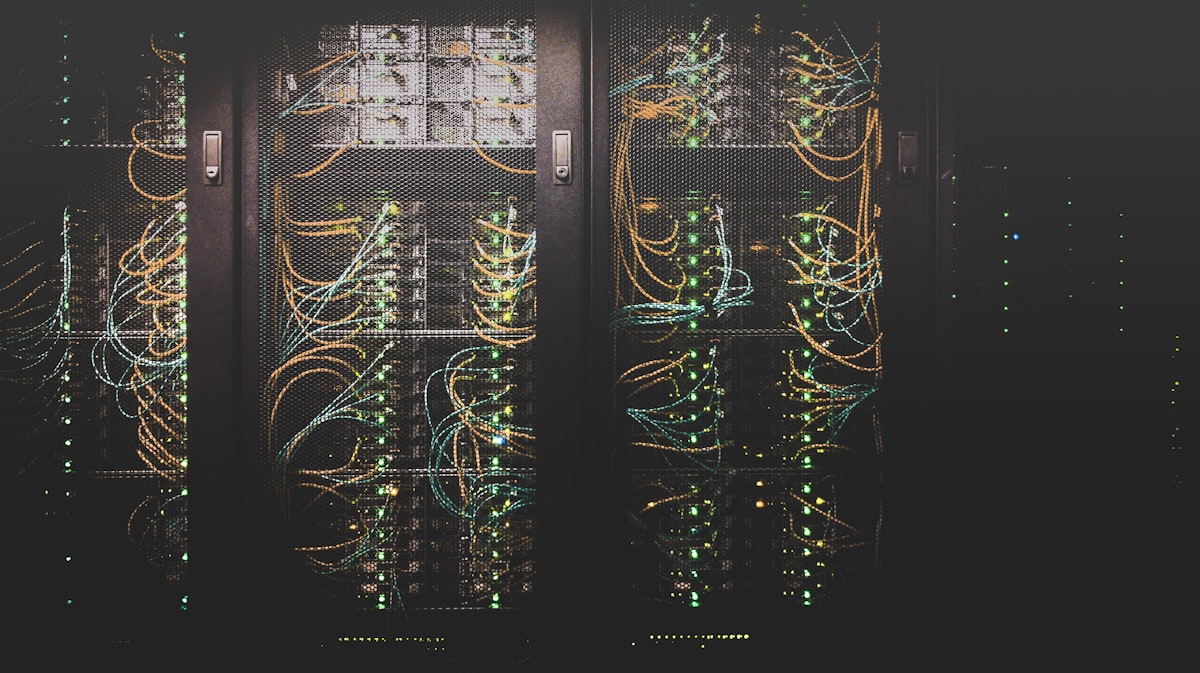
From RFID Reads to AI Ready: How IoT Data Aggregation Powers LLM-Driven Warehouse Intelligence
Every RFID tag read, every BLE beacon ping, every sensor event in a modern warehouse tells a story. Individually, these signals are just noise — millisecond blips in an endless stream of data. But aggregated, cleaned, and contextualized, they become something far more valuable: the training ground for AI systems that can reason about physical operations the way large language models reason about text.
This is the emerging frontier of warehouse intelligence — and it’s transforming how companies think about the data their IoT infrastructure already generates.
The Data Hidden in Plain Sight
A typical RFID-enabled warehouse generates staggering volumes of data. A single fixed reader scanning pallets at a dock door can produce thousands of tag reads per second. Multiply that across dozens of readers, hundreds of BLE beacons, temperature sensors, humidity monitors, and motion detectors, and you’re looking at millions of data points every day.
Most warehouse management systems treat this data transactionally — an item was received, moved, shipped. The event is logged, the inventory count updates, and the raw sensor data is often discarded or archived in cold storage. This is an enormous missed opportunity.
Research published in Discover Internet of Things (Springer, 2024) highlights a growing body of work on integrating large language models with IoT ecosystems, demonstrating that structured sensor data can significantly enhance LLM reasoning about physical-world processes. The key insight: LLMs don’t just need text — they need contextualized operational data to make meaningful predictions about warehouse operations.
The Data Aggregation Pipeline
Turning raw IoT signals into AI-ready datasets requires a systematic pipeline. Here’s how it works in practice:
Stage 1: Collection and Normalization
Raw data from disparate sources — UHF RFID readers, BLE gateways, LoRaWAN sensors, barcode scanners — arrives in different formats, frequencies, and protocols. The first step is normalization: converting everything into a unified schema with consistent timestamps, location references, and asset identifiers.
This is where a platform like Inventrack 6.0 plays a critical role. Rather than treating each sensor type as a siloed data stream, it ingests data from RFID, BLE, UWB, and LoRaWAN sources into a single data layer. Every read event is tagged with context: which reader, which zone, what time, what asset type.
Stage 2: Cleaning and Deduplication
RFID data is inherently noisy. A single tag might be read 50 times in 10 seconds as it passes through a portal. BLE signals fluctuate with environmental interference. The cleaning stage removes duplicates, filters phantom reads, smooths signal noise, and fills gaps where reads were missed.
This stage typically reduces raw data volume by 60-80% while dramatically increasing data quality — a crucial factor for any downstream AI application.
Stage 3: Contextual Enrichment
Clean sensor data becomes truly valuable when enriched with operational context. A tag read at dock door 7 at 2:15 PM isn’t just a data point — it’s a receiving event for Purchase Order #4521, containing pharmaceutical products that require cold chain validation, arriving 2 hours ahead of schedule.
This enrichment layer connects IoT signals to business processes: purchase orders, shipment manifests, production schedules, compliance requirements. It transforms physical-layer data into semantic-layer knowledge.
Stage 4: Aggregation and Feature Engineering
For AI training, individual events are less useful than patterns. The aggregation stage computes derived features:
- Movement patterns: How do assets typically flow through the facility? What’s the average dwell time per zone?
- Temporal patterns: When do receiving peaks occur? How does picking velocity change across shifts?
- Anomaly baselines: What does “normal” look like for each process, so deviations can be detected?
- Correlation features: How do temperature fluctuations correlate with handling speed? Does reader placement affect scan accuracy?
These aggregated features form the structured datasets that LLMs and machine learning models can actually learn from.
Why LLMs Need IoT Data
The IoT-LLM framework, published by researchers at multiple universities and presented at leading AI conferences, demonstrates a compelling approach: augmenting large language models with real-world sensor data to enhance their reasoning about physical processes.
Traditional LLMs are trained on text — they understand language about warehouses but don’t inherently understand warehouse operations. By fine-tuning or augmenting LLMs with structured IoT datasets, we can create AI systems that:
- Predict demand patterns based on historical receiving and shipping data, not just sales forecasts
- Optimize slotting by understanding actual movement patterns rather than theoretical models
- Detect anomalies by recognizing when sensor data deviates from learned operational norms
- Generate operational insights in natural language, making complex data accessible to warehouse managers
- Recommend process improvements based on patterns invisible to human analysis
A practical example: an LLM trained on months of RFID movement data from a pharmaceutical warehouse can learn that certain products consistently experience delays at the quality hold zone. It can then proactively suggest process changes, predict bottlenecks before they occur, and even generate compliance reports that contextualize sensor data within regulatory frameworks.
The Data Aggregator Architecture
Building an effective IoT-to-AI data pipeline requires thoughtful architecture. The most successful implementations follow a layered approach:
Edge Layer: RFID readers, BLE gateways, and sensors perform initial filtering at the edge, reducing bandwidth requirements by transmitting only meaningful state changes rather than continuous raw streams.
Ingestion Layer: A centralized platform — such as Inventrack — receives normalized data streams and applies real-time processing rules. Events are categorized, timestamped with server time (resolving clock drift from edge devices), and stored in both hot storage (for operational queries) and warm storage (for analytics).
Aggregation Layer: Scheduled and streaming aggregation jobs compute features across configurable time windows. Hourly summaries, daily patterns, weekly trends — each granularity serves different AI training needs.
Training Data Layer: The final structured datasets are formatted for machine learning consumption. This includes labeled examples (for supervised learning), time series sequences (for prediction models), and contextualized event logs (for LLM fine-tuning).
Feedback Layer: As AI models make predictions that operators validate or correct, this feedback flows back into the training pipeline, creating a continuous improvement loop.
Real-World Impact: From Sensor Noise to Strategic Intelligence
Organizations that treat their IoT data as an AI asset rather than an operational byproduct are seeing measurable results:
- Inventory accuracy improvements of 15-25% when AI models trained on RFID data detect and flag discrepancies in real-time
- Picking efficiency gains of 20-30% when movement pattern analysis optimizes warehouse slotting and routing
- Predictive maintenance savings of 40% when sensor data patterns identify equipment issues before failures occur
- Demand forecasting improvements of 35% when receiving pattern data supplements traditional sales-based forecasting
The RFID Journal reported in 2025 that warehouses combining RFID with analytics are seeing fundamentally different value propositions — not just tracking items, but building the intelligence layer that drives autonomous decision-making.
Getting Started: Practical Steps
For organizations already collecting IoT data through their WMS, the path to AI-ready data aggregation involves:
-
Audit your data assets: What sensor data are you collecting? What are you discarding? Most organizations are surprised by how much valuable data they already have.
-
Establish a unified data layer: Ensure all IoT sources feed into a common platform with consistent schemas. Fragmented data across siloed systems is the biggest barrier to effective aggregation.
-
Implement progressive aggregation: Start with simple daily summaries and pattern detection. You don’t need a full ML pipeline on day one — even basic aggregated metrics reveal insights.
-
Preserve context: Raw sensor data without business context is far less valuable for AI training. Ensure your aggregation pipeline enriches events with operational metadata.
-
Plan for feedback loops: The most valuable AI systems improve over time. Design your architecture to capture operator corrections and feed them back into training data.
The Convergence of IoT and AI
We’re at an inflection point where the massive volumes of IoT data generated by warehouse operations are becoming the fuel for a new generation of AI-driven intelligence. IoT investments are projected to surpass $1 trillion by 2026, and the organizations that treat this data as a strategic asset — not just an operational necessity — will have a significant competitive advantage.
Platforms like Inventrack 6.0, which already aggregate data from RFID, BLE, UWB, and LoRaWAN sources into a unified operational layer, are naturally positioned as the data aggregation foundation for this AI-driven future. The sensor infrastructure is already in place. The data is already flowing. The question is no longer whether to use IoT data for AI — it’s how quickly you can build the pipeline.
The warehouse of the future won’t just track inventory. It will think about it.
Intensecomp specializes in IoT and RFID solutions for intelligent warehouse and asset management. Contact our team to learn how Inventrack 6.0 can transform your operational data into AI-ready intelligence.
Ready to Transform Your Operations?
Discover how Intensecomp's RFID and IoT solutions can streamline your asset management.
Share this article
Related Articles
Digital Twins Meet the Warehouse Floor: How RFID and IoT Data Bring Virtual Replicas to Life
Learn how digital twin technology powered by RFID tags and IoT sensors is transforming warehouse operations with real-time simulation, predictive optimization, and scenario testing.
How RFID Is Saving Hospitals Thousands of Hours — And Why Healthcare Asset Tracking Is Taking Off in 2026
Discover how passive RFID saved one healthcare company 950 working days per year. Learn why hospital equipment tracking with RFID is surging in 2026.
BLE 6.0 Channel Sounding: Achieving 10cm Accuracy in Indoor Positioning
How Bluetooth Low Energy evolved to deliver centimeter-level positioning accuracy — and why it matters for indoor asset tracking.