Edge AI Revolution: How Real-Time Intelligence is Transforming Modern Warehouse Operations
Discover how edge AI warehouse automation reduces latency to under 10ms, cuts bandwidth costs by 60%, and enables real-time inventory intelligence for next-gen operations.
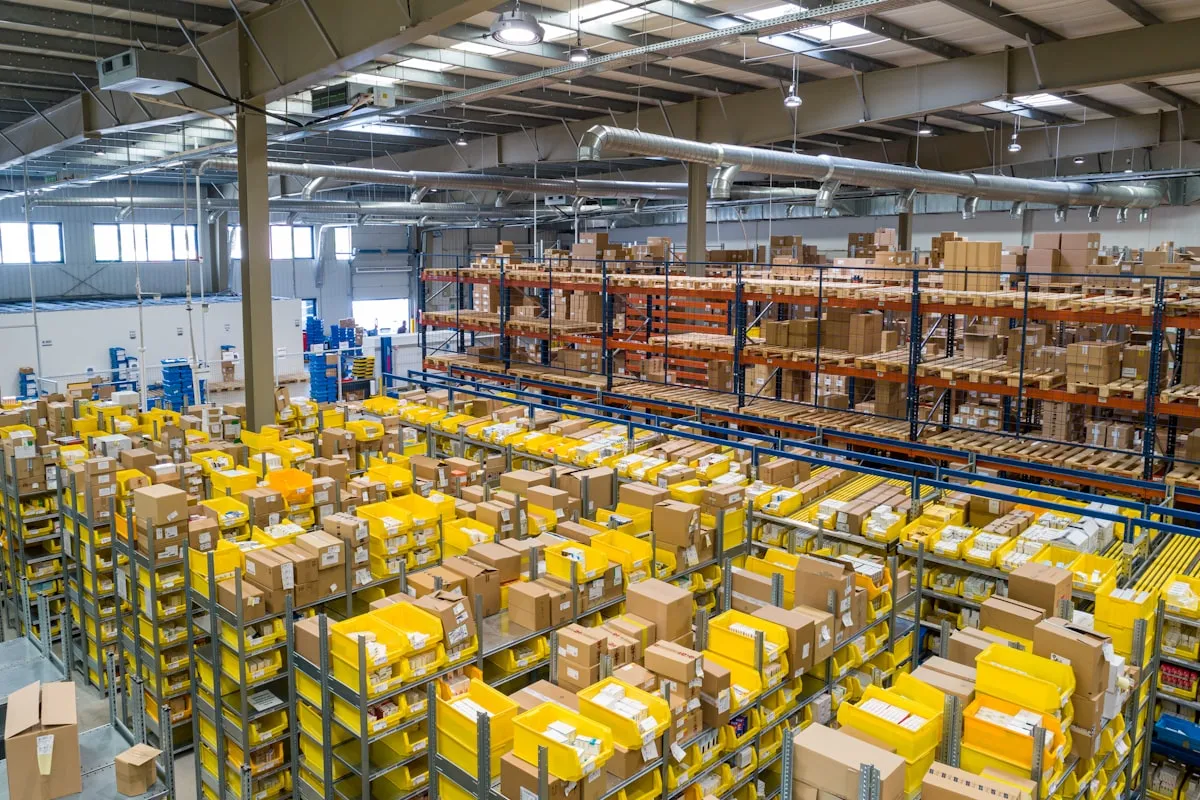
Edge AI Revolution: How Real-Time Intelligence is Transforming Modern Warehouse Operations
The warehouse floor is undergoing a silent revolution. While the physical movements of goods and workers may appear unchanged, beneath the surface, a fundamental shift is taking place in how decisions are made, processed, and executed. The convergence of artificial intelligence with edge computing is creating a new paradigm in warehouse operations—one where intelligent decisions happen in milliseconds directly at the point of action, rather than traveling to distant cloud servers and back.
This transformation isn’t just about faster processing; it’s about reimagining what’s possible when every sensor, scanner, and gateway becomes an intelligent node capable of real-time decision-making. For warehouse managers and supply chain directors, understanding this shift is crucial for maintaining competitive advantage in an increasingly demanding market.
The Evolution from Cloud to Edge: Why Milliseconds Matter
Traditional warehouse automation systems have relied heavily on cloud computing for data processing and decision-making. While this approach provided powerful analytical capabilities, it introduced a critical bottleneck: latency. Every scan, sensor reading, or system alert had to travel from the warehouse floor to remote servers, be processed, and then return with instructions—a journey that typically takes 100-500 milliseconds.
In many warehouse operations, this delay might seem negligible. However, as automation becomes more sophisticated and throughput demands increase, those fractions of a second compound into significant inefficiencies. Consider a high-volume distribution center processing thousands of picks per hour: even a 200ms delay per operation can result in substantial throughput reduction and operational bottlenecks.
Edge AI warehouse automation changes this fundamental equation by bringing processing power directly to the warehouse floor. Modern edge devices now support AI inference workloads that previously required cloud-based GPUs, reducing decision-making latency to under 10 milliseconds. This isn’t merely an incremental improvement—it’s a qualitative change that enables entirely new categories of warehouse optimization.
The Technical Foundation: How Edge AI Works in Practice
The implementation of AI-powered RFID systems and edge computing in warehouses involves several key components working in concert. At the hardware level, specialized edge AI chips are being embedded directly into RFID readers, LoRaWAN gateways, and other IoT devices. These chips provide sufficient processing power to run machine learning inference models locally, eliminating the need for constant cloud connectivity.
Consider a modern RFID scanning station enhanced with edge AI capabilities. Traditional RFID systems simply read tag data and forward it to central servers for processing. An edge AI-enabled system, however, can analyze tag data in real-time, cross-reference it with local inventory databases, detect anomalies, and even predict potential issues—all within milliseconds of the scan.
The software architecture supporting this transformation typically involves lightweight machine learning models optimized for edge deployment. These models are trained on cloud systems using vast datasets but then compressed and optimized for real-time inference on resource-constrained edge devices. The result is a distributed intelligence network that maintains the analytical sophistication of cloud-based systems while delivering the responsiveness required for real-time operations.
Quantifying the Impact: Performance and Cost Benefits
The practical benefits of edge AI in warehouse operations extend far beyond reduced latency. Organizations implementing real-time inventory intelligence systems are reporting significant improvements across multiple operational metrics:
Cost Efficiency Gains: One of the most immediate benefits is the dramatic reduction in bandwidth requirements. Organizations report 40-60% decreases in bandwidth costs by processing data locally instead of continuously streaming it to cloud servers. For large warehouse operations generating terabytes of sensor and transaction data daily, this represents substantial cost savings.
Reliability Improvements: Edge computing provides resilience that cloud-dependent systems cannot match. Edge AI systems maintain 99.9%+ uptime even during network outages, ensuring that critical warehouse operations continue uninterrupted. This reliability is particularly crucial for mission-critical operations such as pharmaceutical cold chain management or just-in-time manufacturing support.
Processing Efficiency: Modern edge devices demonstrate remarkable capability improvements. What once required rack-mounted servers can now be accomplished by compact, industrial-grade edge computers that fit into control cabinets or mount directly onto warehouse equipment.
Real-World Applications: Edge AI in Action
Intelligent Inventory Management
Traditional inventory management systems rely on periodic scans and batch processing to maintain accuracy. Edge AI enables continuous, real-time monitoring that can detect and respond to inventory discrepancies immediately. When an item is placed in the wrong location, an edge AI system can identify the error within seconds and alert workers before the mistake propagates through the system.
Advanced implementations go further, using computer vision combined with RFID data to verify not only product identity but also condition and placement accuracy. This capability is particularly valuable for industries with strict compliance requirements, such as pharmaceuticals or food processing.
Predictive Maintenance Revolution
Edge AI transforms equipment maintenance from reactive to predictive. By analyzing sensor data from warehouse equipment in real-time, edge systems can identify subtle patterns that indicate impending failures. This capability enables maintenance teams to address issues before they cause operational disruptions, significantly improving overall equipment effectiveness (OEE).
The financial impact can be substantial. Unexpected equipment failures in high-volume warehouses can cost thousands of dollars per hour in lost productivity. Predictive maintenance enabled by edge AI can reduce unplanned downtime by up to 70%, translating directly to improved operational efficiency and reduced maintenance costs.
Dynamic Route Optimization
Perhaps nowhere is the benefit of real-time processing more apparent than in route optimization for warehouse workers and automated guided vehicles (AGVs). Traditional systems calculate optimal routes based on static data, but warehouses are dynamic environments where conditions change constantly.
Edge AI systems can recalculate routes in real-time based on current conditions—factoring in temporary obstructions, equipment status, worker locations, and priority changes. This dynamic optimization can improve picking efficiency by 15-25% compared to static route planning.
Integration with Existing Systems: The Inventrack Advantage
The transition to edge AI doesn’t require completely replacing existing warehouse management systems. Modern solutions like Inventrack 6.0 are designed with edge computing integration in mind, providing seamless connectivity between edge devices and centralized management systems.
RFID Integration: Edge AI enhances RFID functionality by providing instant tag reading validation and error detection. When integrated with comprehensive systems like Inventrack 6.0, this capability ensures unprecedented inventory accuracy while maintaining the operational simplicity that makes RFID attractive.
WMS Enhancement: Real-time AI insights generated at the edge can feed directly into warehouse management systems, enabling features like instant stock-out prediction, automated replenishment triggers, and dynamic priority adjustments. This integration preserves existing workflows while adding new layers of intelligence and automation.
RTLS Applications: Real-time location systems benefit enormously from edge processing. Instead of simply tracking locations, edge AI can provide instant alerts for unauthorized zone entries, predict congestion points, and automatically optimize traffic flow throughout the facility.
Security and Privacy Considerations
The distributed nature of edge AI introduces new security considerations, but also provides inherent privacy benefits. By processing sensitive data locally rather than transmitting it to cloud servers, edge systems reduce exposure to potential data breaches during transmission.
However, securing multiple edge devices requires robust device management and security protocols. Modern edge AI platforms incorporate features like encrypted communication, secure boot processes, and automatic security updates to maintain protection across distributed networks.
Implementation Strategy: Getting Started with Edge AI
For organizations considering edge AI implementation, a phased approach typically yields the best results:
Phase 1: Assessment and Planning: Begin with a comprehensive assessment of current infrastructure and identification of high-impact use cases. Focus on areas where latency reduction will provide the most immediate value.
Phase 2: Pilot Implementation: Start with a limited deployment in a controlled environment. This allows teams to gain experience with edge AI technologies while minimizing risk and investment.
Phase 3: Scaled Deployment: Based on pilot results, develop a roadmap for broader implementation. Consider factors such as network infrastructure, staff training requirements, and integration with existing systems.
Phase 4: Optimization and Expansion: Continuously optimize edge AI implementations and explore additional use cases as the technology matures and team expertise grows.
Looking Forward: The Future of Intelligent Warehouses
The current wave of edge AI adoption represents just the beginning of a larger transformation. As edge computing power continues to increase and costs decrease, we can expect to see even more sophisticated applications emerge.
Future developments may include fully autonomous inventory management, where edge AI systems handle routine decisions entirely without human intervention, and advanced predictive analytics that can anticipate supply chain disruptions and automatically adjust operations to compensate.
The integration of emerging technologies like 5G communications and advanced computer vision will further enhance edge AI capabilities, enabling new applications that are currently difficult to imagine.
Conclusion: Embracing the Edge AI Advantage
The transformation of warehouse operations through edge AI represents more than a technological upgrade—it’s a fundamental shift toward more responsive, efficient, and intelligent operations. Organizations that embrace this transformation early will enjoy significant competitive advantages in terms of operational efficiency, cost reduction, and service quality.
For warehouse managers and supply chain executives, the question isn’t whether edge AI will become standard—it’s how quickly they can implement it effectively within their operations. The time to begin this transformation is now, starting with careful planning, strategic pilot programs, and partnerships with technology providers who understand both the potential and the practical challenges of edge AI implementation.
The warehouse of the future is intelligent, responsive, and autonomous. Edge AI is the technology that makes this vision reality.
Ready to explore how edge AI can transform your warehouse operations? Contact our team to discuss how Inventrack 6.0’s edge computing integration can enhance your existing RFID and IoT infrastructure while delivering the real-time intelligence your operations demand.
Ready to Transform Your Operations?
Discover how Intensecomp's RFID and IoT solutions can streamline your asset management.
Share this article
Related Articles
Inventrack 6.0 Official Launch - Revolutionizing Asset Management with AI Intelligence
Introducing Inventrack 6.0, our most advanced asset management system featuring AI-powered insights, real-time tracking, and comprehensive IoT integration for maximum operational efficiency.
How UWB Technology is Revolutionizing Indoor Asset Tracking in 2026
Ultra-Wideband (UWB) tracking delivers centimeter-level accuracy indoors. Discover how UWB combined with RFID is transforming warehouse operations, manufacturing floors, and healthcare facilities.
LoRaWAN Hits 125M Devices: How AI and LPWAN are Transforming Warehouse Operations
Explore how LoRaWAN's 125 million global deployments and AI integration are revolutionizing warehouse automation and asset tracking.